Currently Empty: $0.00
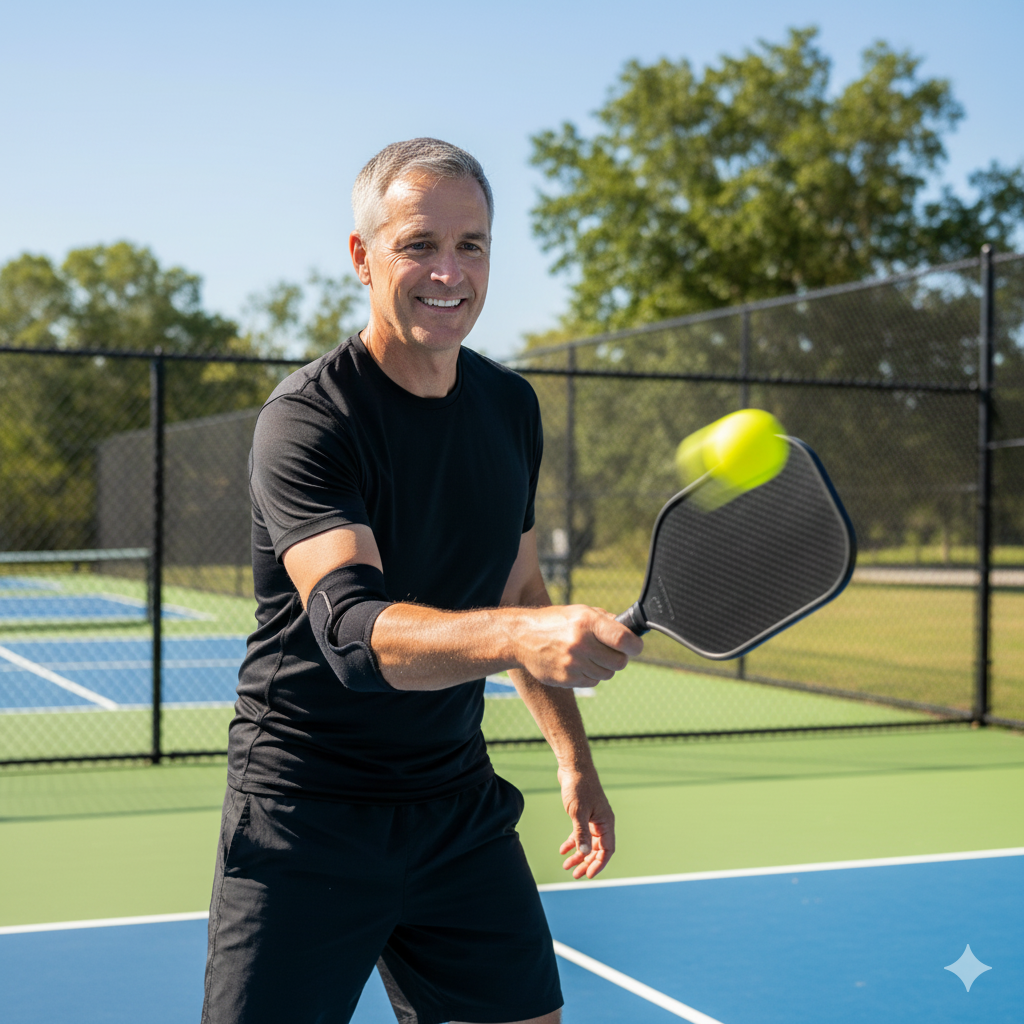
If you play pickleball long enough, you or someone you know will likely face the dreaded “Pickleball Elbow” (Lateral Epicondylitis). It is the silent epidemic of the sport, turning a fun morning session into a painful ordeal.
But here is the good news: You don’t necessarily have to quit playing.
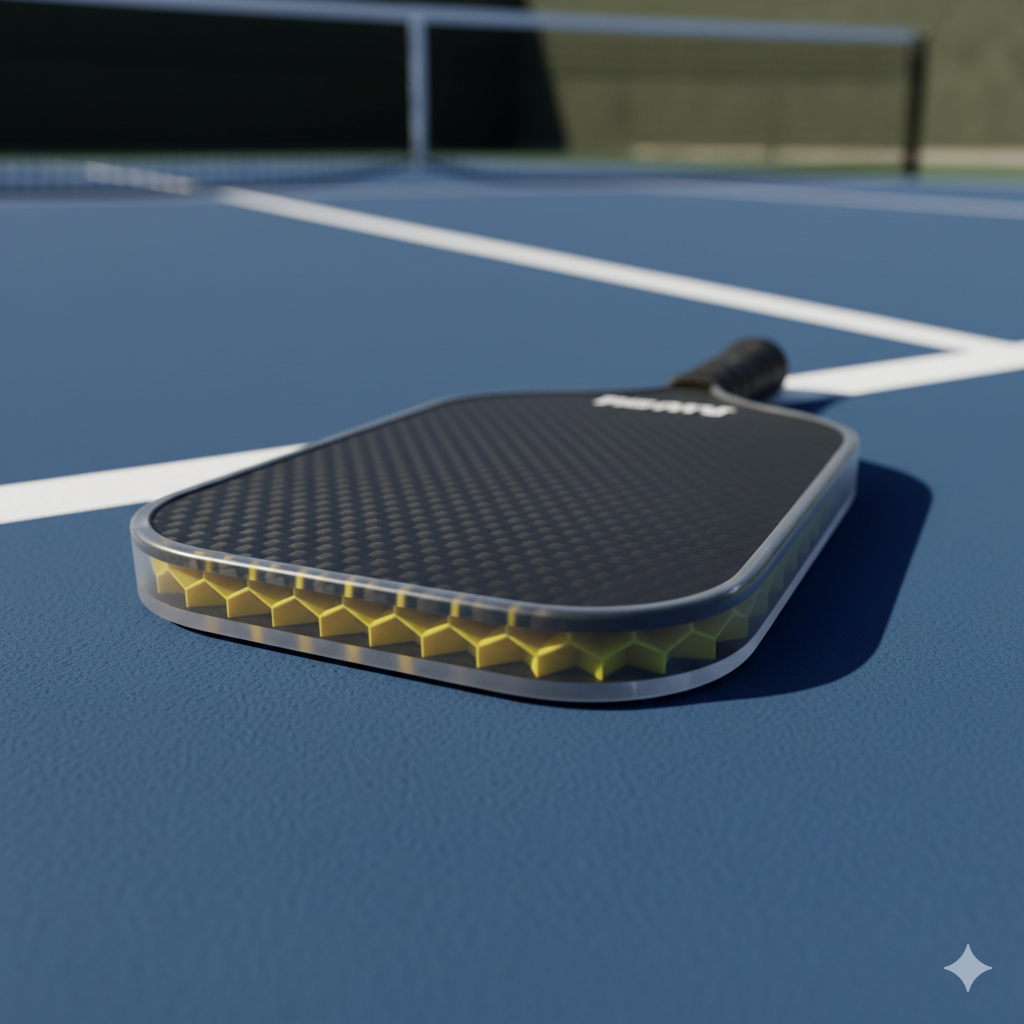
In 2025, paddle technology has evolved significantly. The combination of T700 Raw Carbon Fiber faces and 16mm Thermoformed Polymer cores has created a new class of equipment that absorbs shock better than ever before.
This guide dives deep into the science of vibration dampening and ranks the best carbon fiber paddles designed to keep you on the court and out of the doctor’s office.
Quick Look: Top Picks for Elbow Pain
| Award | Paddle Model | Best For | Core Thickness |
|---|---|---|---|
| 🏆 Best Technology | ProKennex Black Ace | Severe/Acute Pain | 11mm (Kinetic) |
| ⭐ Best Control | Six Zero Double Black Diamond | Performance + Comfort | 16mm |
| 💰 Best Value | Vatic Pro Prism Flash | Budget Recovery | 16mm |
Understanding the Enemy: What Causes Pickleball Elbow?
Before spending money on gear, you need to understand the physics of the injury. It is rarely just “overuse”—it is often about what happens when the ball hits your paddle.
The Vibration Transfer Theory
Every time the ball strikes your paddle, energy is created. If your paddle doesn’t absorb that energy, it travels down the handle, through your wrist, and terminates at the tendon in your elbow.
The Hard Surface: Hitting a hard plastic ball against a hard surface creates a high-frequency shockwave.
The Path: This shockwave seeks the path of least resistance—your muscles and tendons.
Why Old Paddles Make It Worse
If you are using a starter paddle or older technology, you might be hurting yourself.
Thin Nomex Cores: These are hard and loud (“ping” sound). They reflect almost 100% of the impact energy back into your arm.
Fiberglass Faces: Flexible but inconsistent. They can create a “trampoline” effect that is unpredictable, leading to more mishits and more torque.
Key Takeaway: Tennis elbow in pickleball is often caused by a combination of high-frequency vibration and rotational torque from mishits. Stability is the cure.
The Science: Why Carbon Fiber + Polymer is the Best Combo
In 2025, the gold standard for injury prevention is a specific material combination: A carbon fiber face bonded to a thick polymer core.
The Role of the Polymer Honeycomb Core
Polypropylene (Poly) is a plastic that naturally dampens vibration. However, the thickness is the critical metric.
13mm (Power): Too thin. Good for hand speed, but bad for shock absorption.
16mm (The Standard): The “Goldilocks” zone. Thick enough to absorb shock, but not so thick it feels like a log.
20mm (Max Control): Excellent for pain, but often lacks the power needed for competitive play.
The Role of the Carbon Fiber Face
Why pay extra for Carbon Fiber if you are injured? Because stiffness equals stability.
Stiffness vs. Softness: High-grade T700 Carbon Fiber is extremely rigid. It forces the vibration to spread across the entire face of the paddle rather than shooting straight down the handle.
Sweet Spot Expansion: Carbon fiber allows manufacturers to weight the perimeter. A larger sweet spot means fewer off-center hits, which means less torque on your elbow.

Critical Specs to Look For (Buying Guide)
Do not just buy a paddle because a Pro uses it. Pros have strong forearms and hit the sweet spot 99% of the time. You need specs that forgive your mistakes.
1. Swing Weight vs. Static Weight
This is the most misunderstood metric in pickleball.
The Drag: Swing weight measures how heavy the paddle feels in motion.
The Strain: A high swing weight (>120) puts immense strain on your extensor muscles.
Ideal Target: Look for a swing weight under 115.
2. Handle and Grip Dynamics
Grip Circumference: If the grip is too small, you squeeze harder (“Death Grip”) to prevent twisting. This constant tension inflames the tendon. Build up your grip size so you can hold it loosely.
Handle Length: Avoid elongated (5.5″+) handles if your pain is acute. The extra leverage increases torque.
Top 3 Carbon Fiber Paddles for Tennis Elbow (2025 Reviews)
We selected these three based on vibration dampening, stability, and swing weight.
1. The Technology King: ProKennex Black Ace (Pro)
The only paddle clinically proven to reduce vibration.
Key Tech: Kinetic System (Movable tungsten beads inside the chamber).
Performance: Unmatched shock absorption; very fast in the hands.
Who is it for? Players with severe, acute pain who need a medical-grade solution.
2. The Plush Control Pick: Six Zero Double Black Diamond (16mm)
The modern favorite for a “soft” feel.
Key Tech: Foam-injected edge walls (Thermoformed) create a massive sweet spot.
Feel: The ball feels like it sinks into the face (“Dwell time”).
Who is it for? Control players who want top-tier spin and performance but need a plush feel.
3. The Value Healer: Vatic Pro Prism Flash (16mm)
The best paddle under $100 for injury prevention.
Key Tech: Unibody “Prism” construction uses a flexible resin that absorbs impact well.
Price: Significantly cheaper than Gen 3 power paddles.
Who is it for? Budget-conscious players or those buying a second paddle specifically for recovery days.
Setup & Customization for Injury Prevention
Sometimes the paddle is fine, but the setup is wrong.
Proper Grip Sizing with Overgrips
Most stock grips are too thin (4.125 inches). Measure from the middle crease of your palm to the tip of your ring finger to find your size. Consider using a Hesacore grip underlay to increase surface area and reduce grip pressure.
Lead Tape Placement
Adding weight sounds counter-intuitive, but placing lead tape at the throat (4 and 8 o’clock) increases stability (Twist Weight) without making the paddle feel head-heavy. This stops the paddle from wobbling on mishits.
FAQ: Managing Tennis Elbow on the Court
Is a lighter paddle always better? No. A paddle under 7.4 oz is too light. It lacks the mass to block the ball, forcing your arm to absorb the recoil. Aim for 7.8 – 8.1 oz.
Does shock tape work? Mostly for sound. It dampens the “ping” but doesn’t stop the kinetic energy transfer as well as a good core.
When to replace? Every 6-8 months. A “dead” crushed core transmits more vibration.
Conclusion
If you are fighting tennis elbow, your gear is your first line of defense.
Stop using thin, power-focused paddles. Switch to a 16mm Raw Carbon Fiber paddle like the Six Zero DBD or Vatic Pro Prism Flash. The combination of a stiff face (to expand the sweet spot) and a thick, soft core (to absorb energy) is the scientifically proven way to reduce the strain on your tendon.
🔗 Related Resources
[Read More] How to Choose the Right Grip Size
[Review] ProKennex Technology Explained: Is it Hype?
[Guide] Top 5 Exercises for Pickleball Elbow Recovery